
Students intensified their protest over alleged irregularities in recruitment examinations in Jharkhand with five demonstrators joining an indefinite hunger strike, even as Chief Minister Hemant Soren on Wednesday said the question paper leak issues are a national problem and offered talks to resolve the impasse.

'This is not the first time this government has show us the 'darkest day of democracy''

La Liga president Javier Tebas has called for FIFA president Gianni Infantino to resign, accusing the global governing body of 'destroying the football industry' through the expansion of international competitions at the expense of domestic leagues and clubs. Tebas also criticised the handling of a US player's ban and the proposed expansion of the men's World Cup.

Jan Suraaj Party founder Prashant Kishor secured a significant victory in the Bankipur assembly bypoll, defeating the BJP candidate by over 19,000 votes. Kishor attributed his win to support from disgruntled members of major parties and potentially Gen Z protests, while firmly rejecting any future political alliances. He claimed the mandate was a wake-up call for the BJP-led government in Bihar and its Chief Minister Samrat Choudhary, giving his party its maiden presence in the state assembly.

Union Education Minister Dharmendra Pradhan has resigned from his post amidst widespread nationwide protests concerning the NEET-UG 2026 paper leak controversy, citing the larger interest of students and the need to prevent exploitation by anti-national forces. The government is also preparing to introduce a stringent anti-paper leak law.

Major bills, including those on women's reservation, delimitation, and the Foreign Contribution (Regulation) Act (FCRA), face an uncertain future in the ongoing Monsoon session of Parliament due to persistent opposition protests and a lack of consensus.

India has lodged a 'strong protest' with Iran over recent strikes on commercial vessels in the Strait of Hormuz, which resulted in the death of one Indian sailor and injuries to several others, calling for an immediate cessation of hostilities and a return to diplomatic engagement.

The Supreme Court has directed the Reserve Bank of India to prepare a standard operating procedure (SOP) within four weeks to deal with bank accounts linked to cyber frauds, including mule accounts. This directive is part of a broader effort to strengthen responses to cyber-enabled financial frauds, with the court also urging states and UTs to adopt and operationalise grievance redressal and money restoration modules.
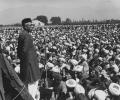
Sheikh Mohammad Abdullah's dismissal and arrest on August 9, 1953 marked a decisive shift in the Centre-J&K power equation. Seven decades later, the erosion of the state's special constitutional position culminated in the August 5, 2019 changes, notes Mohammad Sayeed Malik, the distinguished commentator on Kashmir affairs.

The Centre has ordered the deployment of 20 additional companies of the Central Reserve Police Force (CRPF) in Delhi. These forces are being airlifted from West Bengal to strengthen security measures in response to CJP protests, demonstrations by various political parties, and the ongoing Parliament session, following instances of violent clashes.

Dinesh Trivedi's success or failure in this fragile diplomatic equilibrium will have consequences extending well beyond the Indian high commission in Dhaka. It will shape India's eastern strategic environment for years to come.

Union Minister Jitendra Singh refuted Rahul Gandhi's allegations in Lok Sabha that Home Minister Amit Shah ordered firing on students protesting the NEET fiasco. Singh clarified that no bullets were fired, only tear gas was used, and the authority to order firing rests with a magistrate, not a minister. He also dismissed Gandhi's claims about Shah's cavalcade and foreign travel, criticising the opposition leader for making unsubstantiated remarks during a heated parliamentary debate.

Dharmendra Pradhan's political career faced an unexpected jolt as he resigned as Education Minister following nationwide protests over the NEET paper leak, marking a significant departure from the government's initial dismissive response to the agitation.

A parliamentary standing committee on Information Technology has demanded a personal apology from Meta CEO Mark Zuckerberg for the temporary removal of Prime Minister Narendra Modi's video from Facebook. The committee also discussed potential legal action and the withdrawal of safe harbour protection, while questioning Meta officials on algorithmic bias and accountability.

A factional feud has erupted within the Delhi Soccer Association (DSA), leading to the formation of a three-member ad hoc committee by a majority of its members. This committee aims to manage daily affairs and hold elections on August 30, bypassing current president Anuj Gupta, who has labelled the move "illegal" and plans legal action.

It is plain to see that the US senate bill's real objective is to derail India's time-tested strategic partnership with Russia, points out Ambassador M K Bhadrakumar.

Prime Minister Narendra Modi concluded his three-nation tour in New Zealand, where he and his counterpart Christopher Luxon elevated bilateral ties to a strategic partnership. The visit focused on doubling trade by 2030 and expanding cooperation in the Indo-Pacific region, marking the first visit by an Indian PM in 40 years.

The National Financial Reporting Authority (NFRA) has commenced an investigation into Rajesh Exports concerning a 15.15 trillion financial misstatement, following a referral from market regulator Sebi.

An all-party meeting convened by the government ahead of Parliament's Monsoon Session on Sunday saw the entire opposition staging a symbolic walkout over the invitation to rebel Trinamool Congress MPs and a demand for a discussion on the issues of Ram temple donation 'theft', NEET paper leak and mixing of ethanol in petrol.

The National Jute Board has developed a jute-viscose blended apparel for Indian athletes participating in the Commonwealth Games 2026 in Glasgow, marking the first time jute-based attire will be featured at an international multi-sport event, promoting sustainable textiles and India's jute industry.

Europe has overtaken Asia as India's biggest arms supplier, reflecting New Delhi's evolving defence procurement strategy.

Prime Minister Narendra Modi has announced stringent measures, including the establishment of fast-track courts, to combat exam paper leaks and protect the future of India's youth, following widespread protests over the NEET paper leak.

'India should hold several high-level chess tournaments that would attract the world's top players so that the country will have a say in the game.'
India has condemned the attack on the Cyprus-flagged container ship M/V GFS Galaxy in the Strait of Hormuz, which resulted in one Indian crew member going missing. The United States responded with a third round of retaliatory strikes against Iranian targets, further escalating tensions in the Gulf.

The Bankipur assembly bypoll is a high-stakes electoral debut for Jan Suraaj Party founder Prashant Kishor as he challenges the BJP in a constituency that has been a BJP stronghold for nearly two decades.

Australia vice-captain Ashleigh Gardner faces a personal controversy after estranged wife Monica Wright publicly accused her of infidelity and named teammate Georgia Voll. Neither Gardner nor Cricket Australia has responded.

Prime Minister Narendra Modi has been conferred with Indonesia's highest honour, the 'Bintang Adipurna of the Republic of Indonesia' medal, by President Prabowo Subianto, recognising his leadership in strengthening bilateral relations and furthering Indonesia's unity, continuity, and prosperity.
Prime Minister Narendra Modi's visit to New Zealand culminated in the elevation of bilateral ties to a strategic partnership, with a focus on doubling trade and enhancing cooperation in sports and the Indo-Pacific region. Modi and his counterpart Christopher Luxon attended a sports showcase, acknowledging a century of sporting ties and discussing future collaborations, including India's preparations for the Commonwealth Games 2030. The visit also saw 18 concrete outcomes and 10 agreements signed, alongside discussions with business leaders.

India has condemned an attack on a Cyprus-flagged commercial vessel off the coast of Oman, which resulted in one Indian crew member going missing. The incident occurred amidst escalating hostilities between Iran and the US in West Asia, prompting India to call for immediate de-escalation and an end to targeting commercial shipping in the region.

The BJP is significantly increasing its digital engagement with young people on Instagram, led by Prime Minister Narendra Modi and several Union ministers, in response to the NEET-UG paper leak controversy and subsequent student protests. This strategic shift aims to counter the narrative and communicate government actions on examination reforms.

India is navigating a complex diplomatic landscape, attempting to balance its 'forever honeymoon' with the Israel-UAE-Bahrain axis against its historical ties with Iran, as evidenced by recent high-level visits and evolving geopolitical realignments in the Middle East, observes Ambassador M K Bhadrakumar.

The Congress escalated its campaign against alleged examination irregularities by marching to Prime Minister Narendra Modi's residence, transforming the issue into a direct challenge to his political authority and demanding the resignations of top government officials.

Argentina's conduct after their World Cup final defeat to Spain has come under fire, with players and fans facing criticism for their actions during the trophy presentation and post-match celebrations.

Parliament proceedings were stalled for the fourth consecutive day on Thursday as loud protests by an unrelenting opposition over the NEET paper leak and demand for Education Minister Dharmendra Pradhan's resignation reverberated in both Lok Sabha and Rajya Sabha, leading to adjournment of the two Houses for the day without transacting any business.

The Monsoon Session of Parliament for 2026 is scheduled from July 20 to August 13, with significant political developments expected following recent assembly poll results and internal party rebellions. The session will see the ruling NDA's strengthened position in the Rajya Sabha and potential redrafting of a key Constitution amendment bill.

Prime Minister Narendra Modi has begun a six-day tour of the UAE, the Netherlands, Sweden, Norway and Italy to strengthen bilateral relations amid geopolitical challenges. The trip will focus on energy security, trade, and technological cooperation.

Donald Trump has issued a severe warning to Iran, threatening 'decimation' with '1,000 missiles' if the nation pursues alleged assassination plots against him, while Iranian officials accuse the US of violating a MoU amidst ongoing diplomatic talks.

Union Home Minister Amit Shah met President Droupadi Murmu, following a similar meeting by Prime Minister Narendra Modi, intensifying speculation about an imminent reshuffle of the Union Council of Ministers. Recent resignations and new organisational appointments for some ministers are contributing to the buzz.

Former Punjab Police DSP Jaspal Singh, a life convict in the 1995 abduction and murder of human rights activist Jaswant Singh Khalra, has been reported untraceable at the address provided in his jail records after being released on interim bail in May 2023, sparking a political controversy.

External Affairs Minister S Jaishankar has strongly defended India's decision to purchase Russian crude oil, stating that the country's energy choices are based on cost and availability, and highlighting the West's 'hypocrisy' in criticising India while historically supplying weapons used against it.
